
How Gel Coat Layer Protects FRP Panels From UV Damage & Aging
July 10, 2026
FRP Panels Manufacturer
August 25, 2026Custom FRP Panel Solutions: Thickness, Color, Back Surface Treatment
I. Introduction
The demand for FRP panels varies greatly across different industries and application scenarios: RV bodies, refrigerated truck compartments, medical cleanrooms, chemical corrosion-resistant plants, and horse transport trailer floors each have their own specific requirements in terms of load-bearing capacity, appearance, installation compatibility, and environmental resistance. Standardized, off-the-shelf FRP panels rarely fully meet project requirements. Customized FRP panel solutions, however, can be flexibly adjusted across three key dimensions—panel thickness, surface color, and back-side treatment—to provide a one-stop solution for various engineering and vehicle manufacturing projects.
This article provides a comprehensive breakdown of the three core customization options for FRP panels, explaining the applicable scenarios for different specifications, color schemes, and backing layer processes, to help procurement and engineering clients quickly identify the right customized solution.
II. Panel Thickness Customization: Tailoring to Load-Bearing and Structural Requirements
2.1 Standard Thin Panels (1.5 mm–3 mm)
Lightweight FRP panels have extremely low self-weight, excellent bendability, and are easy to cut and process, making them suitable for non-load-bearing cladding applications.
Applications: Interior and exterior wall panels for RVs, interior walls of refrigerated truck compartments, wall panels for hospital operating rooms, indoor cleanroom partitions, and small equipment enclosures.
Advantages: Lightweight design reduces vehicle/building loads; transportation and installation are time- and labor-saving; lower budget costs.
2.2 Standard Medium-Thickness Panels (3 mm–6 mm)
These are mainstream, widely available specifications that balance rigidity with light weight and offer well-rounded structural stability. When paired with a WR-woven roving reinforcement layer, their impact resistance is significantly enhanced.
Applications: RV roofs, side panels for small-to-medium-sized horse trailers, exterior enclosures for cold storage facilities, interior walls in chemical processing plants, and back panels for laboratory workbenches.
Advantages: Offers a balance of strength and cost-effectiveness, suitable for the vast majority of commercial vehicles and standard industrial wall projects.
III. Custom Color Options: A Rich Palette to Meet Visual Requirements for Various Applications
3.1 Basic Solid-Color Gel Coat Options (Mainstream Standard Configuration)
Utilizing an integrated gel coat coloring process, white, light gray, and dark gray are the standard base colors and the top choices for the RV, cold chain, and medical industries.
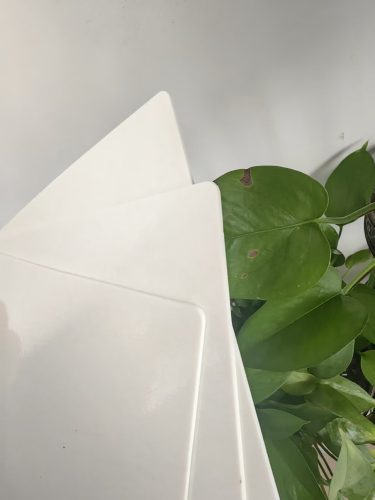
Pure White: High cleanliness; reflects light to brighten interior spaces; suitable for operating rooms, laboratories, refrigerated truck compartments, and high-end recreational vehicles;
Light Gray: Stain-resistant; minor stains and scratches are less noticeable; commonly used in chemical plants, cooling towers, and workshop exterior walls;
Dark Gray: A color specifically designed for anti-slip embossed flooring; it conceals hoof prints, mud, sand, and wear marks, making it suitable for horse transport trailers and industrial walkways.
3.2 Custom Color Panels
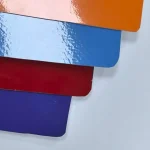
We support customization of solid-color gel coats in blue, green, beige, black, and other shades. The color penetrates the surface uniformly, eliminating issues such as paint chipping or peeling.
Applications: Branded RV body color schemes, factory zoning partitions, specialized cold-chain vehicles, and livestock pens.
3.3 Special-Function Color Formulations
Functional additives can be incorporated during the color-matching process to produce antimicrobial white gel coats, salt-fog-resistant and weather-resistant colored gel coats, and specialized chemical-resistant and anti-corrosion formulations, balancing aesthetics with performance under specific operating conditions.
IV. Customized Back Surface Treatment to Meet Various Installation and Moisture-Resistance Requirements
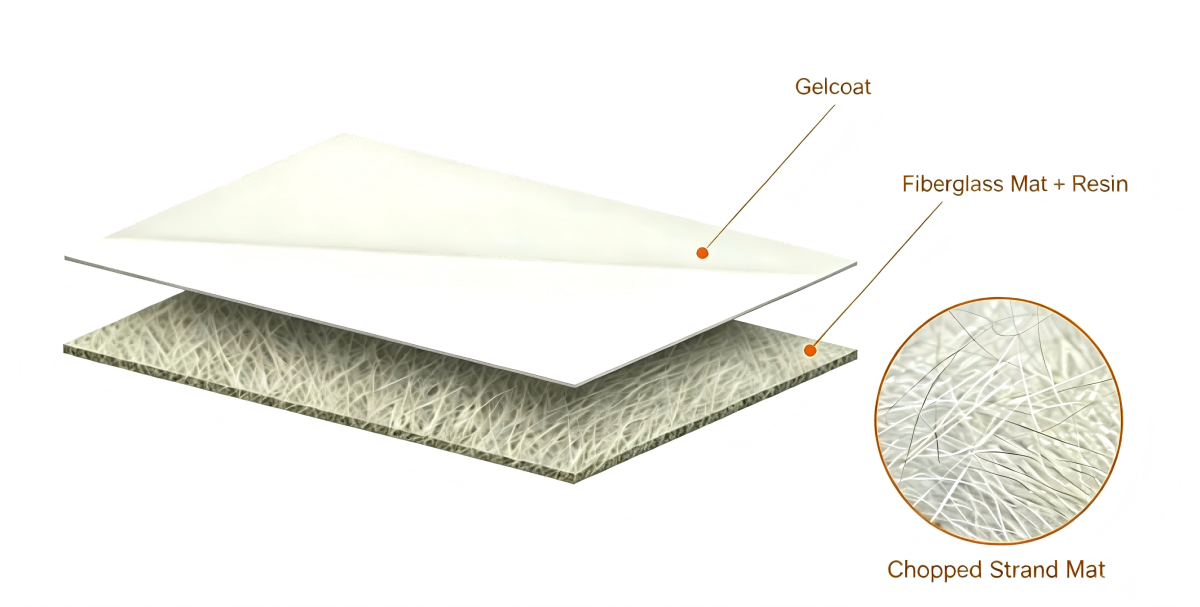
The front surface of FRP panels is uniformly coated with a gel coat functional layer, while the back surface can undergo a variety of customized treatments based on the installation environment, bonding requirements, and moisture-resistance needs. This is a critical process that is often overlooked but significantly impacts the service life of the installation.
4.1 Smooth, Flat Back Surface (Basic General-Purpose Version)
The back of the panel is smooth and flat, with the surface resin fully sealed to prevent water vapor and moisture from penetrating the panel interior, providing excellent moisture-proof and mildew-resistant performance.
Suitable Applications: Direct screw-fastened installation, dry indoor walls, interior walls of refrigerated truck compartments, and medical cleanrooms.
4.2 Felt-Textured Back Surface (Adhesive-Specific Version)
The back is laminated with chopped-strand fiberglass felt, creating a rough, velvety texture that significantly enhances the adhesion of adhesives and polyurethane foam layers, ensuring the bond remains intact without delamination or blistering.
Suitable Applications: RV sandwich composite walls, sandwich-core vehicle panels, refrigerated truck bodies requiring foam insulation, and insulated building wall panels.
4.3 Breathable Mesh Backing (Moisture-Resistant and Ventilated Version)
The back features an embossed mesh pattern, creating tiny ventilation gaps between the panel and the steel frame or wall structure. This prevents condensation buildup and protects the back surface from moisture and mold.
Suitable Applications: Exterior walls exposed to the elements, cooling tower linings, walls in high-humidity coastal industrial areas, and exterior envelopes subject to significant year-round temperature fluctuations.
4.4 Aluminum Foil-Laminated Backing (Enhanced Thermal Insulation Version)
The back is laminated with a heat-reflective aluminum foil layer that reflects thermal radiation, further enhancing the panel’s thermal insulation performance and reducing air conditioning energy consumption.
Suitable Applications: RV roof and side panels, exterior walls of refrigerated truck compartments, and exterior walls of high-temperature industrial facilities.
V. Reference for Customized Combination Solutions
High-end clean-room RV bodies: 3mm white glossy gel coat + fiberglass mat backing, facilitating the application of composite insulation foam layers;
Horse-transport trailer non-slip flooring: 8mm dark gray embossed WR-reinforced panels + smooth moisture-resistant backing;
Chemical Plant Cooling Tower Lining: 4mm light gray corrosion-resistant gel coat + mesh breathable backing;
Hospital Operating Room Wall Panels: 2mm pure white antibacterial gel coat + smooth, sealed backing;
Heavy-Duty Refrigerated Truck Body: 5mm white weather-resistant gel coat + aluminum foil thermal insulation backing.
VI. Summary
Customized FRP panels, with three adjustable parameters—thickness, color, and backing treatment—can precisely meet the specific needs of various industry segments, including RVs, cold chain logistics, healthcare, chemical processing, livestock farming, and industrial construction. Select panel thickness based on the project’s load-bearing requirements; customize gel coat color according to the visual aesthetic of the application; and choose the backing treatment based on installation bonding methods and environmental humidity conditions. A reasonable combination of these three factors maximizes panel service life and user experience while controlling costs.
Our full range of FRP panels supports comprehensive customization across all dimensions. Thickness, solid-color options, back surface treatments, WR high-strength structures, and gel coats with antibacterial, anti-corrosion, and UV-resistant properties can all be combined as needed, and we offer bulk supply for vehicle manufacturing and engineering projects.