Composite materials are gaining growing popularity in numerous industries like construction, infrastructure, and automotive.
Their significant advantages make them an ideal alternative to various materials such as steel, aluminum, wood, and granite. In today’s world, an increasing number of companies are focusing on composite materials and incorporating them into their production processes.
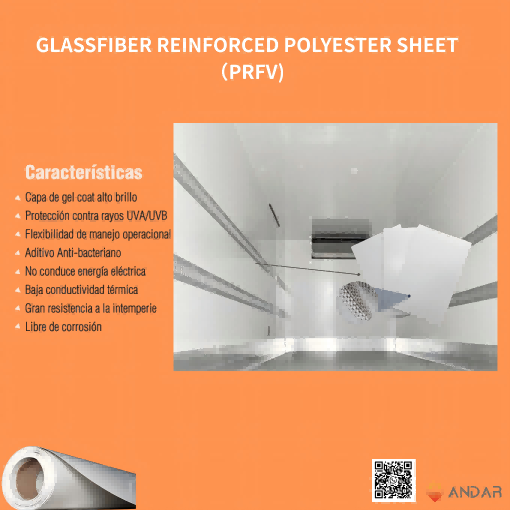
FRP Refrigerated Truck
Steel production began thousands of years ago, while the first composites made from reinforcing fibers only appeared in the last century. But older doesn’t necessarily mean better. While steel has its own applications, composites are the ideal material for many uses.
Steel is one of the most widely used metals worldwide. Yet, it faces fierce competition from composites. From automotive components to bridge decks, composites are increasingly replacing steel.
Composites offer several key advantages over steel.
Steel inherently has design limitations: it’s heavy (leading to high transportation costs), prone to corrosion (resulting in costly maintenance). Let’s look at these advantages:
Their advantages are clear. Precisely because of this, businesses across various industries favor composite materials over steel.
✔︎ Composites are lighter than steel – One cubic meter of cast steel weighs approximately 7.8 tons. Depending on their composition, composites can be up to 70% lighter.
✔︎ Composites offer exceptional strength – They can be tailored to enhance strength in critical areas (e.g., points prone to bending or wear). For steel, increasing strength in a specific area requires adding more metal, which further increases weight.
✔︎ Composites are corrosion-resistant – When used outdoors, composites withstand harsh weather conditions and sudden temperature changes. Steel rusts easily unless painted or galvanized. Corrosion is expensive: losses due to corrosion and the cost of its prevention exceed 5% of Russia’s GDP.
✔︎ Composites are electrically non-conductive – Metals like steel are inherently conductive. Composites are excellent insulators: they do not react to electric fields and exhibit high electrical resistance.
✔︎ Composites enable part consolidation – A single composite part can replace an entire assembly of metal parts, optimizing production processes and shortening manufacturing time.