
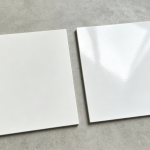
Glossy vs. Matte FRP Sheets: How to Choose the Right Surface Finish for Your Application
June 17, 2026
Comparison of RV Body Materials: FRP Panels vs. Aluminum Alloy vs. Fiberglass Single-Ply Panels
June 24, 2026Embossed FRP VS Smooth FRP
Anti-Slip & Decorative Performance Comparison
Wondering the difference between embossed FRP and smooth FRP? This article compares their anti-slip performance, decorative effects, wear resistance and application scenarios to help you select the right FRP panel for RV, commercial vehicle, building and medical projects.
I. Introduction
FRP (fiber-reinforced plastic) panels are high-performance composite materials commonly used in the RV, commercial vehicle, construction, healthcare, and aquaculture industries. They are widely recognized in the market for their excellent weather resistance, UV resistance, antibacterial and anti-corrosion properties, as well as their lightweight, high-strength, and easy-to-clean characteristics. The mainstream FRP panels on the market are divided into two major finish categories: embossed FRP and smooth FRP. While the base material formulations, gel coat protection, mechanical strength, and customization services for both types are essentially the same, there are significant differences in slip resistance, decorative texture, wear and stain resistance, and long-term maintenance costs. This article provides a comprehensive comparison of the anti-slip performance and decorative effects of embossed FRP and smooth FRP, offering professional guidance for engineering procurement and application selection to help users choose the FRP panels best suited for their specific operating conditions.
II. Core Characteristics of Smooth FRP Panels
2.1 Performance and Aesthetic Advantages
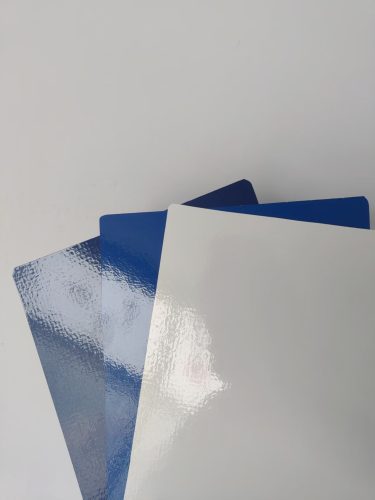
High-gloss smooth FRP panels feature a high-density, flat gel coat surface.
The panel surface is completely free of texture or unevenness, with a smooth and delicate feel.
It boasts a uniform, rich mirror-like gloss, and the finished panels are neat and aesthetically pleasing.
The dense, non-porous structure of the panel’s surface prevents water stains, oil stains, and dust from adhering, making it extremely easy to clean.
Routine maintenance requires only wiping with clean water, significantly reducing operational and maintenance costs.
As high-performance decorative panels, glossy FRP panels inherently possess core properties such as UV resistance, weather resistance, and chemical corrosion resistance.
They support customization of antimicrobial surface coatings and curved installation processes, with thickness, dimensions, colors, and back-side finishes all available upon request to suit a wide range of specialized engineering applications.
2.2 Applications and Performance Limitations
Smooth FRP panels are primarily valued for their high-cleanliness and aesthetically pleasing decorative qualities, making them the material of choice for outdoor display surfaces and sterile indoor environments. They are widely used in applications such as RV exterior walls, commercial vehicle exteriors, outdoor building curtain walls, and medical cleanroom walls. However, due to their smooth, flat surface structure, these smooth FRP panels have low surface friction. Their slip resistance decreases significantly when wet, and minor scratches, fingerprints, and impact marks are highly visible on the panel surface. With limited ability to conceal imperfections, they are not suitable for industrial or transportation environments involving frequent foot traffic, prolonged exposure to moisture, or high levels of friction from heavy foot traffic.
III. Core Characteristics of Embossed FRP Panels
3.1 Enhanced Anti-Slip Safety Performance
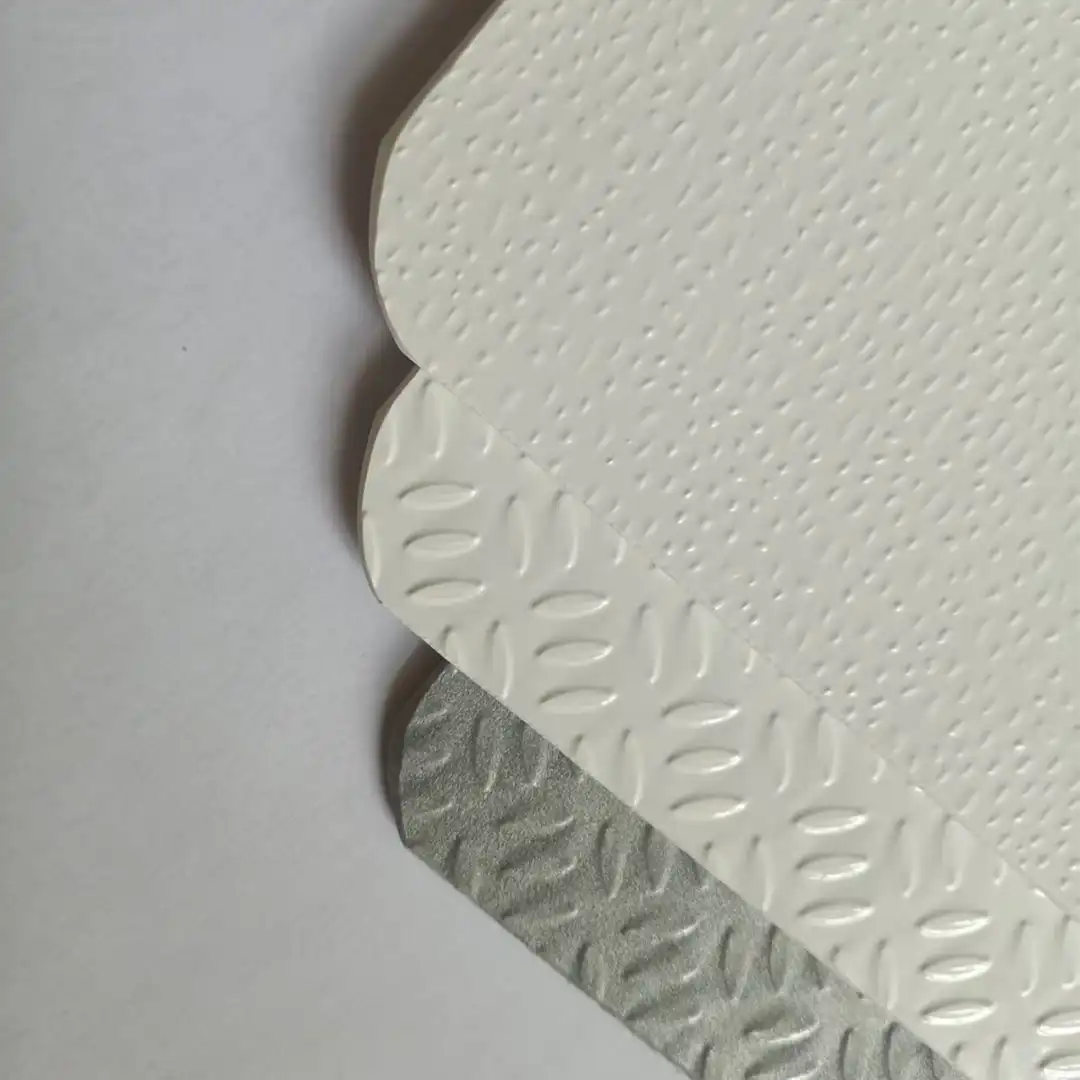
The greatest core advantage of embossed FRP panels is their enhanced anti-slip safety performance. The panels utilize a precision embossing process to form a uniform, three-dimensional anti-slip texture structure and have passed professional pedestrian anti-slip safety certification. The anti-slip effect can be adjusted to fine, medium, or other levels depending on the application scenario. The panels maintain stable friction in both dry and wet conditions, completely eliminating the safety hazards associated with traditional smooth panels becoming slippery when wet. This significantly enhances pedestrian safety, making them the ideal anti-slip FRP panels for RV floors, commercial vehicle steps, pedestrian ramps, and industrial platform walkways.
3.2 Decorative Aesthetics and Stain/Wear Resistance
Compared to plain-surfaced FRP panels with limited designs, embossed FRP decorative panels feature diverse three-dimensional textures—such as wood grain, stone grain, and 3D geometric patterns—that offer greater visual depth and a premium decorative finish. They serve as an ideal replacement for traditional, heavy decorative materials like stone and metal. The unique embossed texture naturally conceals minor scratches, dust, stains, and slight surface imperfections. The panels resist yellowing and aging over time, offering excellent resistance to wear and tear and superior stain resistance, which effectively reduces long-term replacement and maintenance costs. Additionally, the installation of embossed panels results in smaller seams, ensuring better overall integrity of walls and surfaces and maximizing both decorative appeal and practicality.
3.3 Universal Core Performance
Anti-slip embossed FRP panels fully inherit the core performance advantages of the entire high-end FRP panel series. The flexible resin substrate supports on-site bending and shaping during installation, making them suitable for irregular installation scenarios. The high-quality gel coat surface offers exceptional UV resistance, weather resistance, antibacterial properties, and corrosion resistance, enabling stable performance in outdoor environments with extreme temperature fluctuations ranging from -40°C to 120°C. Additionally, the panels support customized performance upgrades, including optional flame-retardant formulations, chemical-resistant isophosphate resins, and WR-woven roving reinforcement structures, making them fully adaptable to various demanding operating conditions in industries such as chemicals, transportation, aquaculture, and healthcare.
IV. Comparison of Core Performance Differences Between the Two Panel Types
Slip Resistance and Safety: Standard smooth FRP panels have low surface friction and are extremely slippery when wet, posing significant safety hazards; embossed FRP panels feature built-in three-dimensional anti-slip textures and have passed professional anti-slip certification, offering consistent slip resistance in both dry and wet conditions and a higher safety factor.
Aesthetic Appeal: Smooth FRP panels are glossy and flat, featuring a minimalist, high-end mirror-like finish that is ideal for outdoor facades; embossed FRP panels have rich, three-dimensional textures that combine decorative appeal with practicality, making them suitable for a wide range of functional decorative applications.
Stain Resistance, Wear Resistance, and Maintenance: Smooth FRP panels are easy to clean, but surface imperfections, scratches, and fingerprints are clearly visible; embossed FRP panels naturally conceal stains and wear marks, offering superior stain and abrasion resistance and lower long-term maintenance costs.
Common Features: Both embossed and smooth FRP panels share core advantages such as UV resistance, weather resistance, antibacterial and anti-corrosion properties, flexible installation, full-range customization, and consistent quality, making them suitable for a wide range of indoor and outdoor applications.
V. Precise Selection Guide
5.1 Prioritize Smooth FRP
For high-standard, clean display scenarios such as outdoor facade cladding, RV exteriors, commercial vehicle panels, sterile medical walls, and cleanrooms, prioritize smooth FRP panels to meet requirements for high aesthetics, easy cleaning, and friction-free foot traffic.
5.2 Prioritize Embossed FRP
For applications such as RV anti-slip flooring, commercial vehicle steps, pedestrian ramps, industrial platform walkways, livestock facilities, high-friction work areas, and construction sites prone to dirt and impact damage—where both anti-slip safety and decorative appeal are required—prioritize the use of embossed FRP panels.
VI. Summary
There is no inherent superiority or inferiority between embossed and smooth FRP panels; the core differences lie in slip resistance and safety versus decorative durability.
Smooth FRP panels excel in cleanliness, aesthetics, and ease of cleaning, making them ideal for high-end, clean display environments; embossed anti-slip FRP panels excel in wear resistance, slip resistance, and the ability to conceal imperfections and resist dirt, balancing practicality with decorative appeal.
Our full range of FRP panels supports customization with multiple finishes and processes—including glossy, matte, embossed, and WR high-strength options—providing a one-stop solution to meet the personalized material needs of projects across all sectors, including RVs, commercial vehicles, construction, healthcare, and industry.