

Comparison of RV Body Materials: FRP Panels vs. Aluminum Alloy vs. Fiberglass Single-Ply Panels
June 24, 2026
The 5 Key Advantages of FRP Panels in the Construction of RV Sidewalls and Roofs
July 1, 2026FRP Panel Buying Guide
Gel Coat, WR Reinforcement, Embossed Texture All Explained
I. Introduction
FRP (fiberglass-reinforced plastic) panels are widely used in the manufacturing of recreational vehicles, commercial vehicle components, building exteriors, healthcare, and the aquaculture industry.
Many procurement and engineering clients often confuse three core configurations when selecting products: the gel coat surface layer, the WR woven roving reinforcement layer, and the embossed texture process.
These three structural elements determine the FRP panels’ weather resistance, structural strength, slip resistance, surface texture, and service life. This article breaks down the functions, differences, and applicable scenarios of these three core processes in an easy-to-understand manner, providing users with a one-stop guide for FRP panel procurement and selection.
This ensures precise alignment with project requirements, helping to avoid wasteful choices and performance shortcomings.
II. Gel Coat: The Protective Shell of FRP Panels
2.1 Core Function of the Gel Coat
The gel coat serves as the outermost protective layer of high-quality FRP panels and is the key criterion distinguishing industrial-grade FRP from ordinary, low-quality fiberglass panels.
A dense, thick gel coat surface completely blocks UV rays, weathering from wind and rain, acid and alkali corrosion, and salt spray erosion, thereby addressing common issues such as yellowing, chalking, cracking, and water penetration at their source.
At the same time, the gel coat surface is dense and non-porous, making it resistant to dust and dirt accumulation.
It supports antimicrobial treatment, is easy to clean, and resists aging and discoloration even with long-term use.
2.2 Suitable Operating Conditions and Value
FRP panels with a gel coat layer offer exceptional weather resistance, capable of withstanding extreme temperature fluctuations ranging from -40°C to 120°C, significantly extending their service life in outdoor applications.
Whether used for RV exterior walls, outdoor curtain walls, refrigerated truck bodies, or in humid aquaculture and chemical processing environments, gel-coated FRP maintains consistent performance.
The full range of high-quality panels on the market—including both glossy and matte finishes—relies on a high-performance gel coat layer to deliver fundamental advantages such as weather resistance, corrosion resistance, and ease of cleaning.
This is the standard process for all high-end FRP panels.
III. WR Woven Roving Reinforcement Layer: The Panel’s High-Strength Skeleton
3.1 WR Structural Principles and Performance Advantages
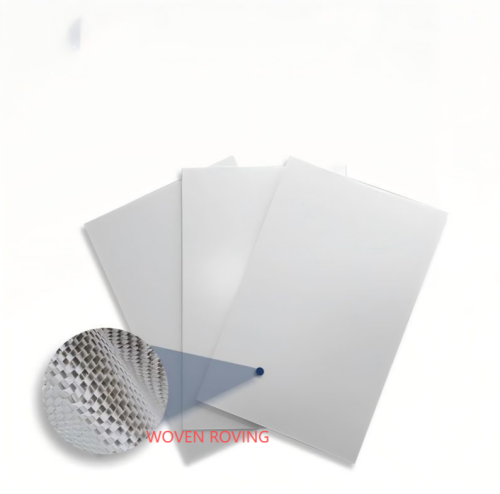
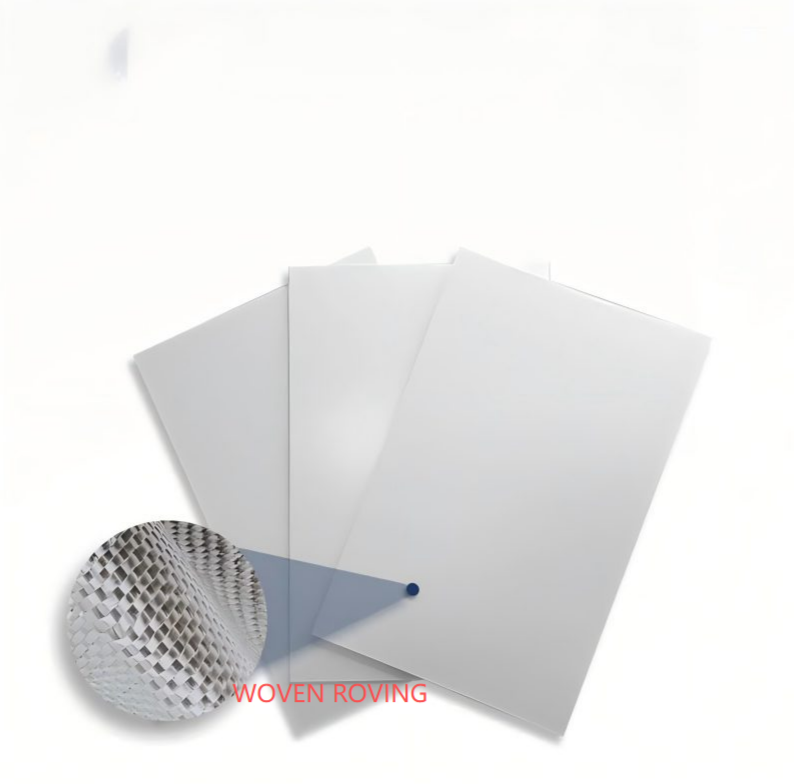
The WR (Woven Roving) reinforcement process is a core inner-layer technology designed to enhance structural strength. Standard FRP typically uses chopped, randomly distributed glass fibers, which are prone to deformation under stress and have poor impact resistance; in contrast, the WR series employs a continuous filament warp-and-weft interwoven structure with a glass fiber content of up to 42%, forming a three-dimensional mesh load-bearing framework that evenly distributes compressive, tensile, and impact forces. The panels’ resistance to compression, tension, bending, and deformation is significantly enhanced, and they feature a lower coefficient of linear expansion, making them less prone to warping or deformation in high- and low-temperature environments.
3.2 When Must WR-Reinforced Panels Be Selected
WR high-strength reinforced FRP is suitable for all load-bearing, foot-traffic, high-frequency vibration, and high-impact applications, including load-bearing floors for RVs and commercial vehicles, vehicle side panels, roof panels, pedestrian ramps, industrial equipment housings, and structural panels for cooling towers. For engineering projects requiring long-term structural stability where deformation or cracking is not permitted, WR woven roving reinforcement is an essential upgrade.
IV. Embossed Texture: Enhanced Anti-Slip and Decorative Performance
4.1 Core Value of the Embossing Process
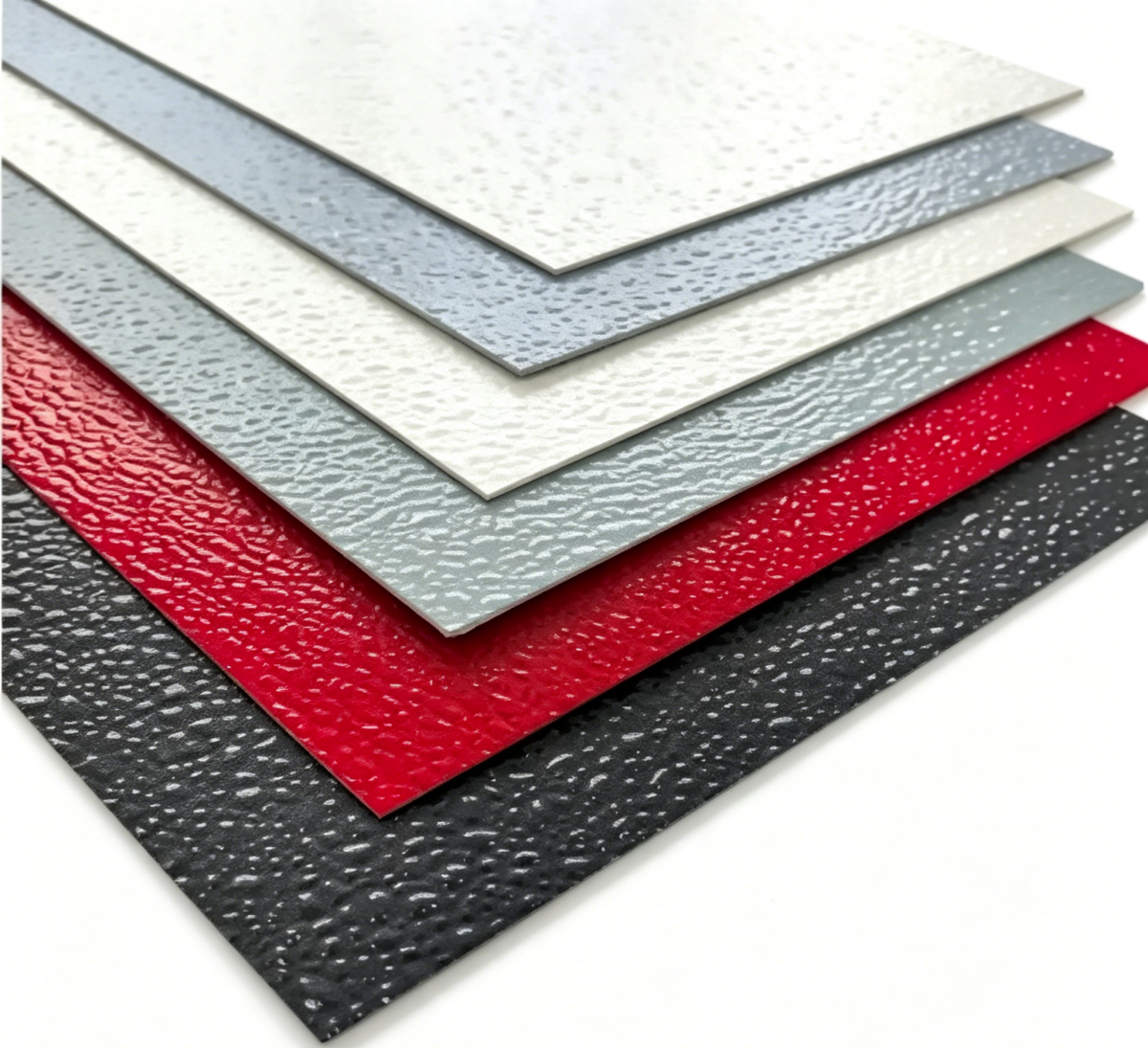
Embossed texture is an upgraded process designed to enhance both the functional and decorative properties of the surface. Compared to smooth panels, embossed FRP features a uniform, three-dimensional granular texture. It has passed professional anti-slip certification for pedestrian use, supports adjustable levels of anti-slip effectiveness, and effectively addresses safety hazards associated with slippery surfaces. At the same time, the raised and recessed texture naturally conceals fine scratches, stains, and impact marks, making it dirt-resistant and wear-resistant, which significantly reduces long-term maintenance costs.
4.2 Application Scenarios
Smooth FRP is suitable for decorative and display applications such as exterior walls, vehicle bodies, and cleanroom walls; while embossed FRP panels are primarily functional, suitable for vehicle floors, industrial platforms, ramps, livestock pens, and high-friction areas. Their diverse wood-grain and stone-texture patterns can replace traditional decorative materials, balancing safety, aesthetics, and practicality.
V. Procurement and Selection Guide (Avoiding Common Pitfalls)
Basic outdoor decoration and clean environments: With the standard gel coat layer, simply choose a glossy or matte finish; which offers the best value for money.
Load-bearing, impact-resistant, and structural applications: Must be upgraded with a WR woven roving reinforcement structure to ensure panel strength and stability.
High-traffic, anti-slip, and decorative applications: Choose embossed panels to enhance safety and durability.
Ultra-demanding and complex conditions: Combine multiple processes—“Gel Coat + WR High-Strength + Embossed Anti-Slip”—to maximize performance.
VI. Summary
The Gel Coat determines the FRP panel’s weather resistance, corrosion resistance, and service life; the WR woven roving determines the panel’s structural strength and impact resistance; and the embossed texture ensures the panel’s anti-slip safety and decorative wear resistance.
Each plays its own role, constituting the three most critical technical indicators for purchasing FRP panels.
By flexibly combining processes based on actual application scenarios, you can select the FRP panels that offer the best value and the highest compatibility.
Our full range of FRP panels supports personalized customization—including process combinations, thickness, color, and back surface treatment—to comprehensively meet the needs of various engineering and vehicle manufacturing projects.