
Antimicrobial FRP Panels for Hospital Operating Rooms and Laboratory Workbenches
July 8, 2026
Custom FRP Panel Solutions: Thickness, Color, Back Surface Treatment
July 13, 2026How the Gel Coat Layer Protects FRP Panels From UV Damage and Aging
I. Introduction
FRP (fiberglass-reinforced plastic) panels are widely used in outdoor applications such as RV bodies, refrigerated truck bodies, building exteriors, chemical processing equipment, and cooling towers, where they are constantly exposed to direct sunlight, extreme temperature fluctuations, and weathering from wind and rain.
Standard fiberglass panels without a gel coat typically exhibit signs of aging—such as yellowing, fading, chalking, peeling, water penetration, and delamination—within 1 to 2 years, severely compromising both their appearance and structural integrity.
In contrast, high-quality FRP panels with an integrated gel coat layer can withstand UV damage and natural aging over the long term, maintaining a flat surface, stable color, and robust structure even after years of outdoor use.
This article provides a detailed analysis of the protective principles, UV-resistant mechanisms, and anti-aging advantages of the gel coat layer, enabling customers to fully understand why the gel coat is the key to the durability of FRP panels.
II. The Core Cause of Outdoor FRP Aging: UV Damage
2.1 Damage Caused by UV Rays to Standard FRP
UV rays in sunlight are the primary culprit behind the aging of composite materials. In fiberglass panels without a gel coat, with a thin gel coat, or with a poor-quality surface, UV rays penetrate the surface directly, damaging the resin’s molecular structure and causing the resin to gradually oxidize, chalk, and become brittle.
This is also why ordinary fiberglass panels on the market commonly exhibit the following issues: rapid yellowing after prolonged sun exposure, a powdery and rough surface, color fading, surface cracking, rainwater seeping into the panel interior, and exposed, fuzzy fiberglass fibers—ultimately leading to delamination and the panel becoming unusable.
2.2 Temperature Fluctuations and Weather Exposure Accelerate Aging and Failure
In addition to UV radiation, outdoor diurnal temperature fluctuations, repeated rainwash, and alternating dry and wet conditions accelerate surface cracking in ordinary panels.
This allows moisture, dust, and corrosive agents to penetrate the panel’s interior, further exacerbating aging, water infiltration, deformation, and delamination, thereby significantly shortening the service life.
III. The Principle of UV Protection Provided by the Gel Coat Layer
3.1 Forming a Dense, Opaque Protective Barrier
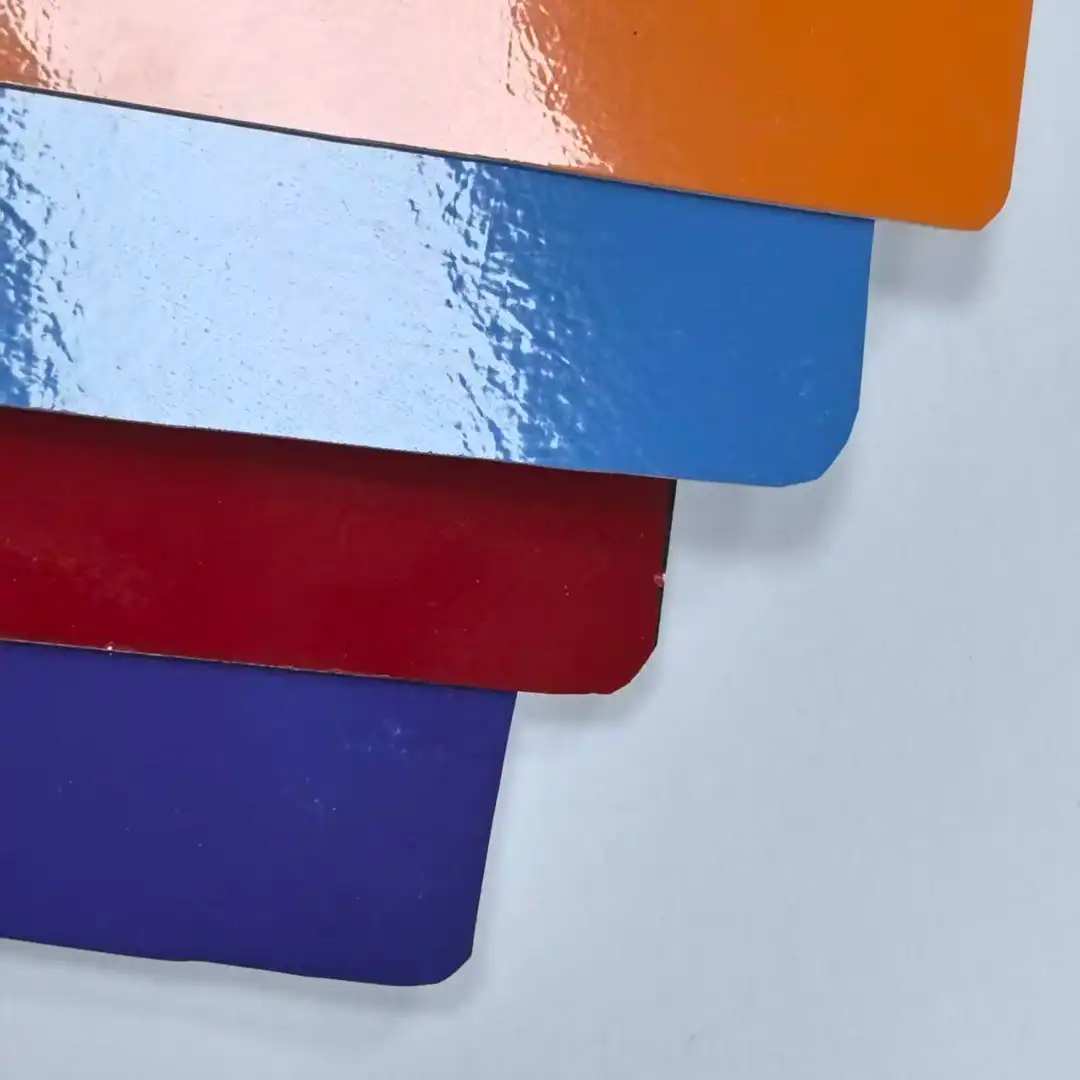
High-quality gel coat is a specialized resin surface layer with high density and strong adhesion, uniformly covering the outermost layer of FRP panels. It acts as the panel’s “sunscreen,” blocking, absorbing, and shielding against ultraviolet rays to prevent direct UV exposure to the internal glass fibers and matrix resin, thereby preventing resin oxidation and aging at the source.
Unlike post-application paint or spray coatings, the integrally molded gel coat is fully fused with the panel; it will not peel, flake, or delaminate, ensuring long-lasting and stable protection.
3.2 Specialized UV-Resistant Formulation with Excellent Yellowing Resistance
Industrial-grade FRP gel coats are formulated with UV-resistant and anti-yellowing additives, providing excellent weather resistance.
Under prolonged exposure to intense sunlight, they effectively inhibit oxidation reactions, significantly reducing the likelihood of panel yellowing, fading, and chalking, thereby helping the panel surface retain its original color, luster, and smoothness over the long term.
IV. Four Core Advantages of the Gel Coat Layer in Resisting Overall Aging
4.1 Eliminates Chalking and Fuzzing, Maintaining a Smooth, Flat Panel Surface
The most noticeable issues with aging gel-coat-free panels are surface chalking, exposed fiberglass, a rough texture, and a tendency to accumulate dust that is difficult to clean. FRP panels with a gel coat feature a dense, smooth surface that ages extremely slowly. Even after long-term outdoor use, they do not chalk, fuzz, or become rough, consistently maintaining a flat and pristine appearance. Their aesthetic appeal and cleanliness far exceed those of ordinary fiberglass panels.
4.2 Color-Locked and Sun-Resistant, Resistant to Fading and Discoloration
Ordinary panels show noticeable fading, mottling, and severe color inconsistencies after just six months to a year of outdoor use. Gel-coated FRP utilizes a solid-color gel coat process, where the color uniformly permeates the surface layer. It offers strong resistance to sunlight and weathering; even after years of outdoor use, the color remains uniform without mottling or fading, significantly enhancing the overall aesthetic appeal and consistency of vehicles, equipment, and building exteriors.
4.3 Waterproof and Leak-Proof, Preventing Delamination and Rot
The gel coat layer is free of capillary pores and offers exceptional waterproofing performance, preventing rainwater and condensation from penetrating the panel’s interior. Many gel-coat-free FRP panels may appear intact on the surface but are actually absorbing water internally, leading to delamination, mold growth, and rot, which eventually result in extensive blistering, cracking, and peeling. The gel coat protection completely blocks moisture penetration, ensuring the panel’s internal structure remains dry and stable over the long term and preventing delamination and failure.
4.4 Weather and Temperature Resistance, Suitable for Extreme Outdoor Environments
High-quality gel-coated FRP can operate stably within a wide temperature range of -40°C to 120°C.
It withstands intense summer heat and direct sunlight, winter cold and frost, as well as alternating wind, rain, and snow.
It is highly resistant to warping, cracking, and delamination caused by thermal cycling, offering exceptional structural stability.
V. Comparison of Aging Effects Between Gel-Coated and Ungel-Coated FRP
Ungel-coated/standard fiberglass panels: Short-term yellowing and fading → Surface chalking and fuzzing → Water penetration and moisture absorption → Delamination → Complete damage and scrapping; frequent maintenance and short service life.
One-Piece Gel-Coated FRP Panels: UV-resistant, non-fading, non-chalking, crack-resistant, and watertight; long-term weather resistance and anti-aging properties; stable appearance and structure; extremely low maintenance costs.
VI. Scenarios Where Gel-Coated FRP Panels Are Essential
In any scenario involving outdoor use, direct sunlight, prolonged exposure to rain, significant temperature fluctuations, or a need for long-term durability, FRP panels with an original gel coat must be selected:
RV exterior walls and roof panels, refrigerated truck bodies, outdoor curtain walls, cooling tower linings, chemical plant exterior walls, outdoor wall panels for animal husbandry facilities, cleanroom exterior enclosures, and protective panels for equipment exposed to the elements over the long term.
VII. Summary
The gel coat layer is the core safeguard that enables FRP panels to resist UV damage, delay aging, and extend service life. Through four key mechanisms—UV shielding, resistance to yellowing and oxidation, waterproofing and leak prevention, and dense protection—it completely resolves the common aging issues of ordinary fiberglass panels, such as yellowing, fading, chalking, water penetration, delamination, and cracking.
Simply put: FRP without a gel coat has thickness but no longevity; only FRP with an integral gel coat is a truly durable, industrial-grade outdoor panel.
Our entire line of FRP panels utilizes a high-quality, integral gel coat process, offering options such as UV-resistant thickened gel coats, antimicrobial gel coats, chemical-resistant and corrosion-resistant gel coats, and WR high-strength structural customization to meet all outdoor and industrial material requirements.